Flower
Bevlog

Archive for the ‘alcohol beverages generally’ Category

Tiger Blood

This, quite apparently, is what Charlie Sheen has been drinking. It is Tiger Blood Vodka, made in Hungary. No word on whether it’s the source of the Adonis DNA. The evidence is here.

Fox says the real Tiger Blood is something along the lines of mangosteen — a fruit we covered about a year ago.

Editor’s Note:  nothing in this post should be regarded as curative, therapeutic, advisable or serious.

Related Posts:

Tags:

, ,

Posted in:

alcohol beverages generally, vodka


Email This Post Email This Post     |    Print This Post Print This Post     |    


Big Changes at TTB

In recent weeks, TTB has implemented sweeping changes, with little attention from the media. Some of the changes are for the better, but many will make it substantially harder for beverage producers and importers to get things done. These changes will affect companies and products as profoundly as any other changes at this agency over the past few decades, no less than other big changes such as tax rates, the shift from ATF to TTB, the Part 13 revocation rules, the demise of caffeine alcohol beverages, or new Administrators. It is difficult to think of any law change or policy change with as much day-to-day impact on the regulated parties, and much of this was done with no opportunity for meaningful industry input.

  1. The big changes begin way back in 2003, with the launch of COLAs Online, and pick up speed in the past year. Much of the change brought by COLAs Online is for the better. The system works well and frequently makes things faster and easier.
  2. In late 2009, TTB slashed their availability for in-person visits. For many prior years or decades, it was relatively easy to meet with a regulator, in the labeling and formula division, any weekday from 10-noon or 1-3 (four hours a day). Beginning about a year ago, TTB unceremoniously cut this to one paltry hour per day (a reduction of 75 percent). During this meager time, it can be very difficult to find anyone to help (like a game of musical chairs with 10 contestants and 2 chairs).
  3. Around the same time, TTB scrambled the phone numbers. From the beginning of TTB until this point, it was fairly easy to locate the person responsible for your label or formula issue, and speak directly with that person. No more. All the numbers changed, and the new numbers, for the most part, are not publicly available. Instead, it’s necessary to call a main number and try to get transferred to the right person. Sometimes this works well but in a recent example I called the main number throughout an entire Friday and nobody picked up during the entire day. Even if you get through, good luck getting past the obvious (“it’s in process”). Eventually, after dozens of calls, we reached a supervisor and that person was extremely helpful — but this is the sort of thing that used to be much easier.
  4. In January 2011, TTB rolled out Formulas Online (FONL). Like COLAs Online (at point 1 above) this seems like a good system and something that could help the regulated industry. It looks like the days of paper formulas are essentially over.
  5. In February 2011 TTB rolled out Permits Online (PONL). We will report on FONL and PONL later.
  6. Then, in the first week of February 2011, TTB dropped the hammer here and said you should be prepared for labels to take up to 90 days (or more, if they need revisions) — and formulas could take another 90 days. Beyond that, there is no more safety valve to request an expedite in exigent circumstances. This will be a profound and devastating change for many companies. If you have a bright idea for a new product, you could be looking at 6-8 weeks to get the flavors approved, then another 8-10 weeks to get formula approval, then another 8-10 weeks to get label approval. This is if you are lucky and all these things actually get approved. Then of course you have more weeks of getting bottles, printing labels, shipping, etc. Before this big change, it was entirely possible to get an urgent label approved within 2-3 days, and we had no trouble getting this done on hundreds of occasions over many years. It is easy to say companies should allow a bit more time; but in many ways that’s a silly platitude, and we are talking about no small amounts of time. At what point does it get ridiculous and scarcely worth the bother of launching a new product? Should it really take 27 weeks or so to change Bud Light Lime to Bud Light Lemon? This is quite amazing in that, TTB has finally, over the course of eight years, launched various modern and computerized systems, mainly to make all these processes flow more readily. And yet, during the same time, the wait for a typical label approval has gone from a few hours to a few weeks (or even months?). Partly this is a function of a huge number of labels being submitted. TTB is getting something like 140,000 labels per year. And there is only one person in the entire federal system to handle beer labels, and only one person to handle all the world’s spirits labels. In some ways it seems that TTB may have succeeded too much, and made the label filing process a bit too easy (with few if any filters or barriers to submitting a few more bright or not so bright label ideas here and there; for example, there are no user fees).

It is possible that I am being too cynical, and these various changes will allow TTB to get away from distractions and focus on cranking through swarms of electronic submissions. If I am being too negative, nobody will be more delighted than I, if TTB proves me wrong, or shows that these things are actually big improvements. It would also be helpful to hear from the old timers, who have been getting things done at TTB since well before I started in 1988. For example, maybe Tom, Ann, Deb, Vicky, or Fred will chime in about the good(?) old days. Way back in the late 1980s and early 1990s, well before all these amazing gadgets and Oklahoma City, it is bittersweet to recall a seemingly bygone era. When you could wander the halls of the ATF building without an escort. When you could show up in the afternoon with a stack of paper labels, wait your turn with only a few people ahead of you, sit down with the decision maker, and walk out an hour later with a stack of label approvals. When you could talk it over with the regulator, change a few rejections into a few approvals with an argument, a prior approval, a few strokes of a pen, a use-up, or a warning.

These changes will hit hard on small companies and big companies. They will also have a big impact on Washington-based lawyers and consultants, but at least the lawyers and consultants have plenty of tools, and they aren’t busy trying to make wine. It could be worse. It’s possible. TTB could cut the hours another 75%, to 15 minutes a day, or change the 90 days to 180. Right about now, however, it would be nice to see some trends in the other direction.

Related Posts:

Tags:

, ,

Posted in:

alcohol beverages generally


Email This Post Email This Post     |    Print This Post Print This Post     |    


FDA and FTC Banish Four Loko and Joose

In a massive and coordinated action yesterday, the Federal Government moved to favor Red Bull and pummel other drinks with caffeine.

FDA handed a giant gift to Red Bull here.

The FTC handed a humongous present to Red Bull here.

Other actions are expected imminently, as legions of other regulators rush in to exaggerate the dangers (it looks like soda, it’s “loaded with caffeine,” it’s like a “plague” and “toxic”) and ignore evidence to the contrary. This follows many state actions in recent weeks. Presto, problem solved! We eagerly await the evidence that young people cut back on alcohol, or cut back on co-consumption of  alcohol with caffeine. We hope it’s better than the current leading study; it purports to highlight the dangers of the pre-mixed products such as Four Loko, Liquid Charge, Joose and scores of others — without ever having examined any such products. Instead, the O’Brien study reviewed products so different they are not even within the scope of yesterday’s governmental actions (none of which, after some dexterous sleight of hand and misdirection, stopped it from instigating the above actions).

We believe caffeine and alcohol raise plenty of important public policy issues, whether they are combined or not, and they warrant serious deliberation. But many of the deliberations so far reflect political pressures more than an even-handed review.

November 18, 2010 Update:  TTB lands another blow, against caffeine added to alcohol beverages, here.

Related Posts:

Tags:

, , , ,

Posted in:

alcohol beverages generally, flavored malt beverage


Email This Post Email This Post     |    Print This Post Print This Post     |    


So Many Warnings

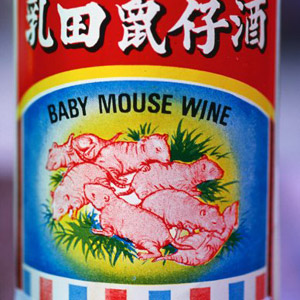
If you like your warnings big and graphic, you will love the alcohol beverage warnings under consideration in Thailand. The Wall Street Journal of September 17, 2010 shows the photo above, as an example of one of the warnings under consideration.

If you think it can’t happen here, take a look at this tobacco website which explains: “New legislation passed in June 2009 requires pictorial health warnings on 50% of the front and back of US cigarette packages within 24 months, in addition to a 15 month implementation window.” At least 13 countries already require graphical warnings to cover more than 50% of the cigarette pack. At least 38 countries have finalized requirements for picture warnings.  The Wall Street Journal article explains:

Alcohol companies world-wide are lining up to fight a Thai plan to require graphic warning labels about alcohol on the country’s domestic and imported beer, wine and liquor bottles.

The proposed labels—which would cover 30% of the bottles’ surface area—include unusually explicit warnings about risks associated with alcohol use. One picture shows a shirtless man grasping a woman by the hair and raising his fist to hit her, accompanied by the words, “Alcohol consumption could harm yourself, children and family.”

The labels “are the most extreme we’ve ever seen,” says Brett Bivans, vice president of the International Center for Alcohol Policies, a Washington-based not-for-profit group funded by alcohol companies.

In the meantime, liquor companies worry that Thailand is about to set a dangerous precedent that other larger countries could follow. With only 65 million people, the Southeast Asian nation will never be one of the world’s biggest alcohol importers. But in 2005, it was among the first to slap graphic warning labels on cigarette packaging, such as pictures of diseased lungs. Since then, the U.K., Malaysia and other countries have followed suit.

The stakes are high enough that the U.S. government agreed to pay for a group of Thai officials to travel to Washington to meet with U.S. alcohol experts to learn about alternatives to graphic warning labels, people familiar with the plan say.

Health advocates and industry leaders have long argued about the effectiveness of warning labels on consumer products. Critics maintain that graphic labels lose their sting once consumers grow accustomed to them.

Related Posts:

Tags:

,

Posted in:

alcohol beverages generally


Email This Post Email This Post     |    Print This Post Print This Post     |    


The Beef is Here (Meaty Booze 5)

Boston Beer has finally answered the big question eluding so many since the 1980s — “where’s the beef?” It’s right here, in the beer bottle. Burke in the Bottle is “Ale Brewed with Beef and Spices with Molasses Added.”

Throw in a side of broccoli and we are all set for the evening. If this guy and Sam Adams think it’s worth drinking, who are we to cast aspersions?

For Meaty Booze aficionados, here is Meaty Booze 1 (worms), 2 (scorpion), 3 (chicken), and 4 (bugs).

Related Posts:

Tags:

, ,

Posted in:

alcohol beverages generally


Email This Post Email This Post     |    Print This Post Print This Post     |    


Feedburner Get bevlog via email. Enter email address:

Delivered by FeedBurner

RSS Subscribe to the RSS feed


This blog has been enhanced by WeFixWP