Posts Tagged ‘business strategy’
Too Remote Brewery
Lang Creek Brewery bills billed itself as “America’s Most Remote Brewery” and is was 500 miles east of Seattle, in Marion, Montana.
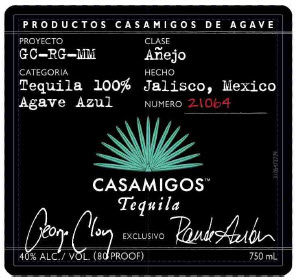
Perhaps it was too remote. Sadly, it closed a few months ago. The above is one of the last of about 12 approvals over just five months (for the most recent owner of the brewery). It’s a tough business and I suppose it’s even tougher when things like supplies and repairs and visitors are a few hours away. New West explains why the brewery could not carry on, complete with good photos. In the article, Lang’s marketing director confirms:
“The idea was great, the location was awesome — it’s such a gorgeous piece of property. … But business-wise it’s just hard to make a living when you don’t have consumers all around you.”
Was it really America’s most remote brewery? By what measure? What’s the most remote brewery now?
Related Posts:
Tags:
Posted in:
Email This Post
|
Print This Post
|
Puzzle Time Wines
As lawyers, we would never condone playing games on wine labels. But here are two examples where TTB was okay with it.
On the left, Puzzle Time wine has a word search game.
On the right, the Fetzer label features a “rebus.” That’s right, a rebus. The approval describes a rebus as “a kind of word puzzle that uses pictures to represent words or parts of words.” Can you read the rebus on this label? I don’t want to spoil the fun here, but the answer can be found on the label approval.
Related Posts:
Tags:
Posted in:
Email This Post
|
Print This Post
|
Forty Proof Beer

Once upon a time, the federal government prohibited the disclosure of alcohol content on malt beverage labels. The rationale was to protect public health by discouraging brewers from competing in “strength wars,” to sell more product. It took years of persistence by Coors Brewing Company and a ruling from the Supreme Court in 1995 to persuade TTB (then ATF) to allow the practice.
Did the strength wars ever materialize, once the rules changed? Among the major brewers, not really. In fact, we noted that there is war of a different kind — increasingly lighter beers (in alcohol and caloric content) from Anheuser-Busch and MillerCoors.
But the craft beer movement appears to have its own strength war. “Extreme beers” — beers with intense flavors and alcohol contents at three, four or even five times the amounts in a typical American lager — help small brewers stand out in an increasingly crowded marketplace. And yes, they have many more calories too.
Boston Beer Company offers one of the strongest beers available for sale in the United States, with their Utopias, at 24% alc./vol. and a whopping 732 calories per 12 ounce serving (as per Skilnik).
Dogfish Head Craft Brewery’s 2002 release of World Wide Stout is listed at 23.04% alc./vol. and has approximately 666 calories per 12 ounce serving.
Although the offerings from Boston Beer and Dogfish Head top 20% alc./vol., the labels do not disclose the actual alcohol content. Sonoran Brewing Company’s Sonoran 200 is not so coy. It weighs in at 19.37% alc./vol. and has the highest alcohol content we’ve seen listed on a TTB-approved beer label. No caloric content details are readily available, but one might reasonably expect this 13.2 ounce bottle to be roughly equivalent to a Big Mac (at a scant 576 calories).
Related Posts:
Tags:
business strategy, legally interesting/controversial, policy
Posted in:
Email This Post
|
Print This Post
|
Is Beer the New Wine?

At a 2009 National Alcohol Beverage Control Association (NABCA) panel discussion, Boston Beer Company’s Jim Koch boldly proclaimed that “beer is the new wine.”
According to Wine and Spirits Daily, Koch said:
With the emergence of the new mentality about beer driven by small craft brewers, America is starting to create a beer culture in the same way America has created a wine culture.
Is Koch right? The labels tell part of the story. Lately there are many examples of beer labels with terms and elements formerly associated only with wine.
First is Sierra Nevada’s Estate Brewer’s Harvest Ale. TTB sets forth strict rules for wine labeled with the word “estate.” One such rule is that the wine must be produced from grapes grown on land owned or controlled by the bottling winery. According to Greg Kitsock of the Washington Post, Sierra Nevada produces their Estate Ale with hops and barley grown only at their brewery in Chico. The label adds that “this ale reflects the flavors of our surroundings in California’s fertile Central Valley.”
Second is Trader Joe’s 2009 Vintage Ale, produced by Unibroue of Canada. For wine labels, it is clear that a vintage date means one thing: the year in which the grapes were harvested. What exactly does it mean on beer? The Trader Joe’s label tries to explain. “You might be used to seeing vintages on wine; perhaps not so much on beer. And that’s what makes this ale so special.” The label also says that the 2009 Vintage Ale was produced in 2009, in limited quantities, and that it tastes and looks different than those released in previous years.
Third is Blue Moon Grand Cru Limited Edition from MillerCoors. The labeling takes design cues from traditional Champagne labels. It has a vintage date and also mentions “Grand Cru” (meaning “great growth” in French), which is a term generally associated with French wines. Our last and maybe most famous example is Miller High Life, “The Champagne of Beers.”
From a labeling and marketing standpoint, it appears that some beers are trying to develop the same prestige that wine enjoys with the American public. So Koch may well be right. After all, he sells a single bottle of beer for $150, a price near or above that for many of Napa and Bordeaux’s finest.
Related Posts:
Tags:
business strategy, hybrid, policy
Posted in:
Email This Post
|
Print This Post
|