Posts Tagged ‘container’
Keg Wine

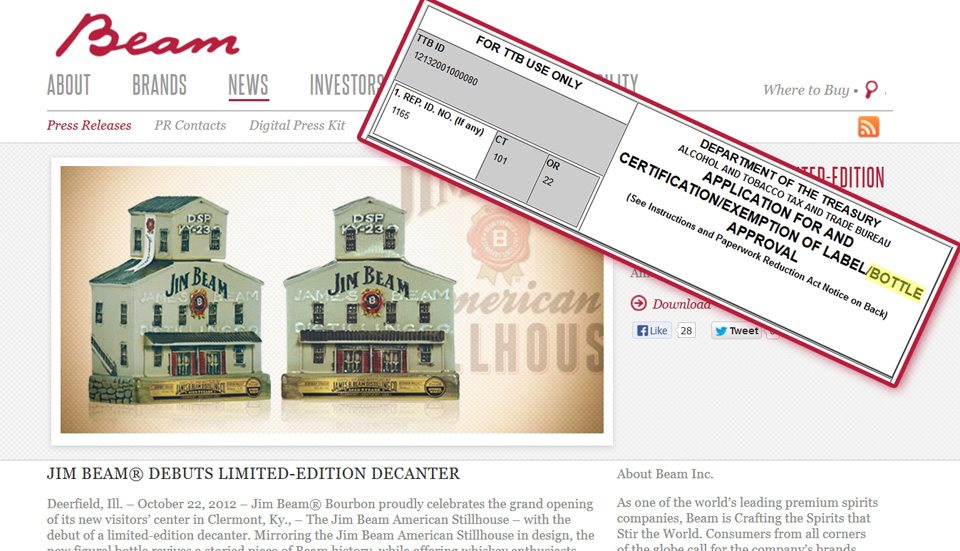
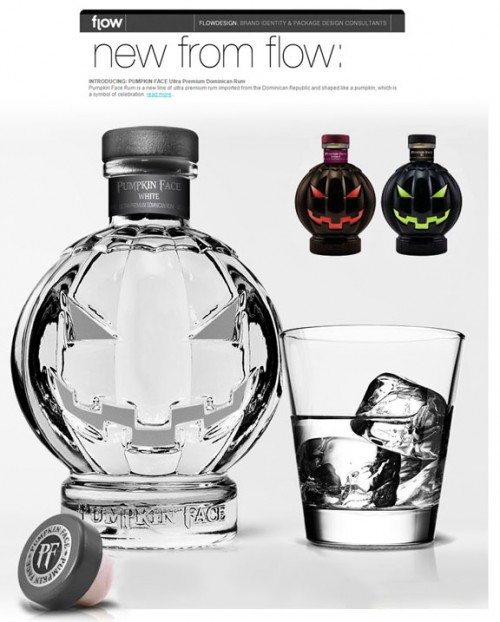
It’s a good thing TTB never got far with the proposal to ban non-traditional containers. Otherwise, we wouldn’t have beer in boxes, spirits in a skull, nor the wine in steel kegs above.
From the looks of this approval, Jordan Kivelstadt plans to pack high-end wines in 20 liter refillable kegs. His website says:
Free Flow Wines is the first wine company dedicated to producing draught wines. We produce premium wines and “bottle” them in sustainable, stainless steel kegs, for restaurants, bars, and catering companies.
Apart from Free Flow and JK Cellars, Jordan is the winemaker at Pavo Wines. The Pavo site explains that in a few short years since graduating with an engineering degree, Jordan has worked at wineries in Sonoma, Australia and Argentina.
Related Posts:
Tags:
Posted in:
Email This Post
|
Print This Post
|
Liquor Sicle

This Liquor Sicle label features a prominent reference to “Liquor.” This has become rare. Where did the term come from, and where did it go?
The Online Etymology Dictionary defines “liquor” this way:
early 13c., likur “any matter in a liquid state,” from O.Fr. licour, from L. liquorem (nom. liquor) “liquid, liquidity,” from liquere “be fluid.” Sense of “fermented or distilled drink” (especially wine) first recorded c.1300. To liquor up “get drunk” is from 1845.
It is semi-ironic that this term is being applied to one of the few TTB products that is not intended to be consumed in a “liquid state.” From way back in 1892, here is a court struggling with the term, and trying to find the distinction between beer and liquor.
In a further irony, the term is probably used more commonly, these days, on malt beverages (such as Colt 45) compared to distilled spirits. “Malt liquor” goes back to at least 1937, and Alvin Gluek secured a patent on it in 1948.
Related Posts:
Tags:
Posted in:
Email This Post
|
Print This Post
|
Nude Beer
One might assume that beer + naked women is a nearly unstoppable combination. But it did not work out that way for Coast Range Brewing. It looks like the Gilroy, California purveyor of Nude Beer is long gone. Their last COLA was in 2006 and their last Nude Beer approval was in 2004. There is no sign of the company at the web address above. In all, the company got about 23 approvals for Nude Beer before fading away.
Coast Range provides a clear lesson that it takes a lot more than unclothed women to sell beer. In case it’s not obvious from the above image, the idea is that you buy the beer and then peel off part of the label to reveal a woman with little if any clothing. A slightly blurred example is at the end of this sentence but don’t click it if you don’t want to see nudity. This kind of stickering is a good option for companies that want to show something more than the government and retailers might otherwise allow. We wanted to capture it before it fades into ancient history. This also shows that the system has a lot of checks and balances, such as the market, and the government doesn’t need to carry the entire burden.
Related Posts:
Tags:
container, legally interesting/controversial, policy, risqué, sexual
Posted in:
Email This Post
|
Print This Post
|
Cubes of Cachaca
Here is Leblon Cachaca Ice Cubes. It is Brazilian rum (with flavor), in a 200 ml. pack designed to freeze.
This should be of interest to Camper English at Alcademics, as he is inclined to tinker with all manner of alcohol beverages and ice.
The label says this product is “Made with Glazierepura Natural Freeze Technology.” BevNetwork explains that Glazierepura is a newly patented technology that can “freeze any alcohol and does not affect the flavor profile of the spirit.” Even though this Leblon product is only 40 proof, the technology would allow, for example, making ice cubes out of vodka — or even Single Malt Scotch. The US-Israeli company behind this technology partnered with Leblon for the offical US launch, on April 27, 2009 in New York.
Related Posts:
Tags:
Posted in:
Email This Post
|
Print This Post
|
Braille Wine Labels
Above is an example of a wine label embossed with Braille. Such labels were virtually unavailable before about 13 years ago. Then, in 1996, M. Chapoutier of France begain using Braille on all its labels. The British newspaper, The Independent explains:
The technique is the same as printing visible labels: an iron Braille negative is pressed onto the back of the paper label to make the Braille bumps. Mr. Chapoutier decided to use his 40-year-old printing machine to make every one of the 2.5 million bottles of wine he produces each year. They have proved a success … . As fewer than 20,000 of the one million registered blind and partially sighted people in the UK can read Braille, other methods are also being urged including the use of audio-tapes, large print and computer disks.
The article explains that bleach and eye drops are the only other UK products imprinted with Braille.
It would seem that the Braille text should be covered on the TTB label approval, just like English letters, or any other language such as Japanese. And yet we have flipped through quite a few label approvals with Braille and very few mention Braille on the label approval.
Related Posts:
Tags:
Posted in:
Email This Post
|
Print This Post
|