
Posts Tagged ‘processing’
Ethyl

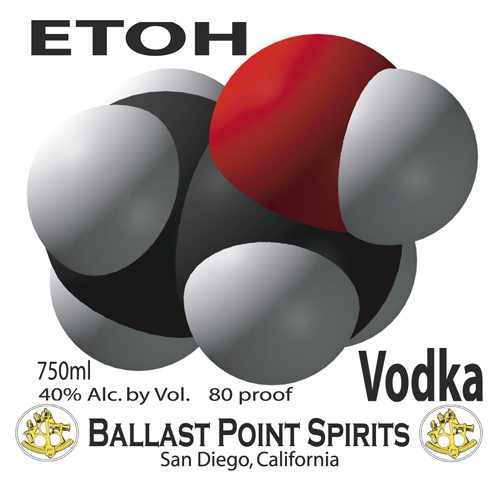
Here it is. What all the controversy is about. EtOH. It is quite possibly the most popular psychoactive substance in the world, running neck and neck with caffeine, at least among substances that don’t require a prescription or jail time.
EtOH is otherwise known as ethanol or alcohol or ethyl alcohol. Ethanol is a contraction for ethyl alcohol and ethyl derives from “ether.” This particular EtOH is bottled by Ballast Point Spirits of San Diego, California.
Related Posts:
Tags:
legally interesting/controversial, processing
Posted in:
Email This Post
|
Print This Post
|
Vodka Distilled 18 Times
L’Chaim Vodka is distilled no less than 18 times. In an excellent website (www.theendofvodka.com), VeeV Acai Liqueur pokes fun at the vodkas distilled 3, 5, 23, 570 times. The site is funny, pretty, and makes a good point. It tends to suggest that after the first couple of distillations, and after pushing the spirit past 190 proof, it’s a fairly pointless exercise to distill it more.
Virtuoso Distillers, of Mishawaka, Indiana, is undaunted. In box 19 of the L’Chaim approval, Steven Ross patiently explains that the vodka is distilled 18 times. TTB frequently asks for such a confirmation, when the label sets forth the number of distillations or filtrations. This is odd because the label already claims it under penalty of perjury, the certification doesn’t seem to make it any more likely to be true, and it would seem to be a minor point in any event (for the reasons suggested by VeeV).
Mr. Ross has a lot more going on, on this label. He further explains that L’Chaim (or, “To Life”) is similar to “cheers,” carefully avoiding any suggestion that it’s about health. This is not a small matter because, prior to this approval, the term was rarely used in a prominent way on US alcohol beverage labels. Mr. Ross explains that the letters that spell L’Chaim also “add up to the number 18.”
Related Posts:
Tags:
Posted in:
Email This Post
|
Print This Post
|
Two Products, 24 Flavors
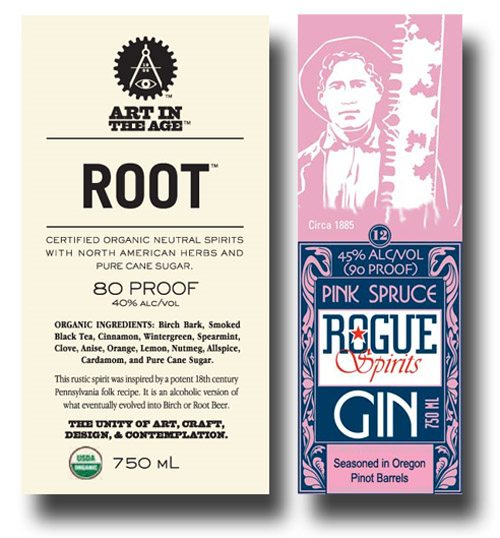
Here are two recent spirits products with an unusal and unusually large assembly of flavors. On the following list, the first 13 flavors are on the Root label, and the next 11 are on the Pink Spruce label.
- Birch bark
- Smoked black tea
- Cinnamon
- Wintergreen
- Spearmint
- Clove
- Anise
- Orange
- Lemon
- Nutmeg
- Allspice
- Cardamom
- Pure cane sugar
- Spruce oil
- Cucumber
- Juniper berries
- Angelica root
- Orange peel
- Lemon peel
- Coriander
- Ginger
- Orris root
- Grains of paradise
- Tangerine oil
The Pink Spruce Gin label also mentions that the product is made with “free range coastal water,” it is “Seasoned in Oregon Pinot Barrels,” and distilled from grain. The Root product strangely does not mention the commodity from which distilled and probably should. It was “inspired by a potent 18th century… recipe. … It is an alcoholic version of what eventually evolved into Birch or Root Beer.” There is almost no overlap in the list of flavors from one to the other.
Related Posts:
Tags:
ingredients, processing, unlikely combinations
Posted in:
Email This Post
|
Print This Post
|
Beer with Civet Droppings
Flying Dog has their “Good Beer, No Sh*t” Road Dog Porter as chronicled here.
The Dog is not to be outdone by the Weasel. Whereas Road Dog, apparently, has no sh*t whatsoever, this ingredient is the centerpiece of Mikkeller Beer Geek Brunch. It is made with weasel excrement. Literally. The label explains that:
This imperial Oatmeal stout is brewed with one of the world’s most expensive coffees, made from droppings of weasel-like civet cats. The fussy Southeast Asian animals only eat the best and ripest coffee berries. Enzymes in their digestive system help to break down the bean. Workers collect the bean-containing droppings for Civet or Weasel Coffee. The exceedingly rare Civet Coffee has a strong, distinctive taste and an even stronger aroma.
Lest you be scared away by the “droppings,” here is at least one connoisseur who can vouch for it.
Related Posts:
Tags:
ingredients, processing, would you drink it?
Posted in:
Email This Post
|
Print This Post
|
Diamonds, Gold & Vodka: What Recession?
One is filtered through diamonds and the other has gold flakes in the bottle. Double Cross Vodka is made in the Slovak Republic, where it is “filtered with diamond dust.” The small red strip label says so. Thanks to The Intoxicologist and Emily Haile for bringing this to our attention. Luxist explains:
The seven-times-distilled spirit uses only 100 percent organic, estate-grown winter wheat and mountain spring water drawn from aquifers located 200-feet below ground level. Double Cross’ diamond dust filtration system is said to provide unprecedented filtration capability because of the “unique shape and sub-micron size of the diamond dust particles.”
Rather than filter through the costly substance and leave it at the distillery, Gold Flakes Vodka puts the 24 karat gold right in each bottle. Luxist says it will retail for about $60 per bottle.
Related Posts:
Tags:
business strategy, ingredients, processing
Posted in:
Email This Post
|
Print This Post
|