Flower
Bevlog

Posts Tagged ‘serving facts/allergens’

Advocaat

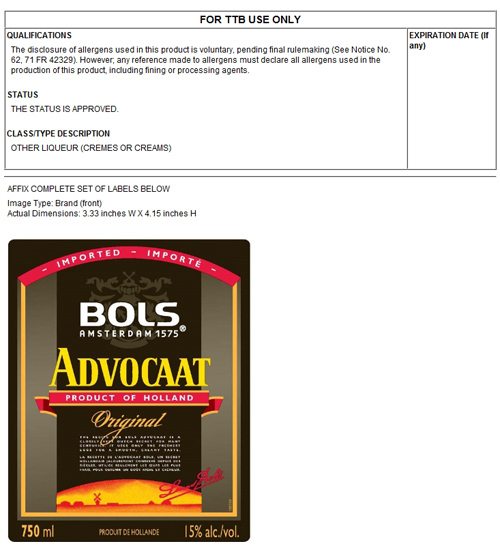
This fine product has eggs on the label, and in the bottle, so it comes equipped with an allergen qualification, on the approval. The above qualification says:

The disclosure of allergens used in this product is voluntary, pending final rulemaking (See Notice No. 62, 71 FR 42329). However; any reference made to allergens must declare all allergens used in the production of this product, including fining or processing agents.

And it is a harbinger of the allergen fun that is soon to commence. Soon, allergen disclosures will be mandatory on beer, wine and spirits. There is not much on the web or in the rules to explain how Advocaat should be made and where the name comes from, but the Bak’s label does a pretty good job. It explains that Bak’s Advocaat is made with potato spirits, egg yolk, sugar, vanilla and a bit of brandy.

Related Posts:

Tags:

,

Posted in:

cream liqueur


Email This Post Email This Post     |    Print This Post Print This Post     |    


US Senate Comments; Top 9 Things to Know

senate

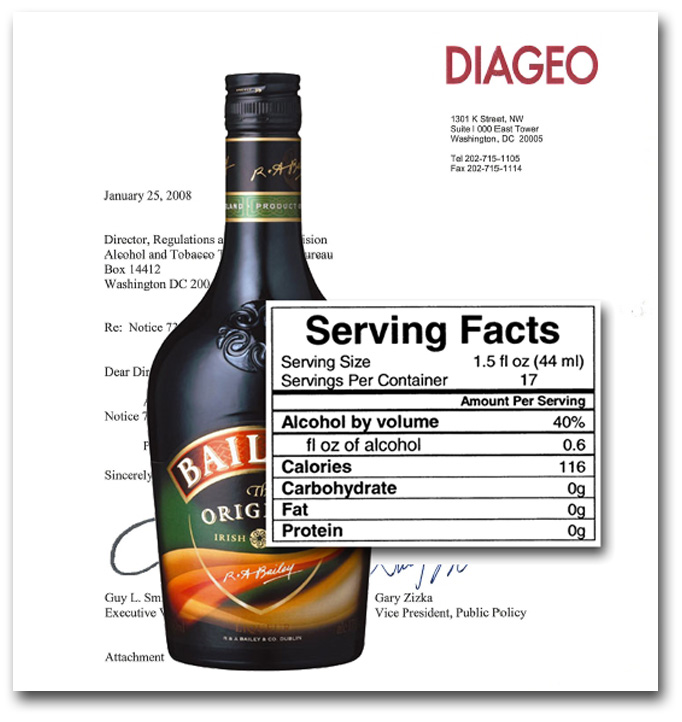
It is likely that all beer, wine and spirits labels will change dramatically in the near future. TTB Administrator John Manfreda confirmed this in a recent speech. TTB has been working on new rules since CSPI and other groups submitted a petition in 2003. The new rules would require a “Serving Facts” panel on every container. This panel would include a lot more information, such as the typical serving size, number of servings per container, calories, carbohydrates, protein and fat. Because this is a big, controversial change, TTB has received more than 18,000 public comments during the past few years. There are far too many comments for most people to review, and so we will highlight and summarize the most noteworthy comments here. The most recent proposal and comments are here. This is comment 22 in a series; to see others, click on the “serving facts” tag below.

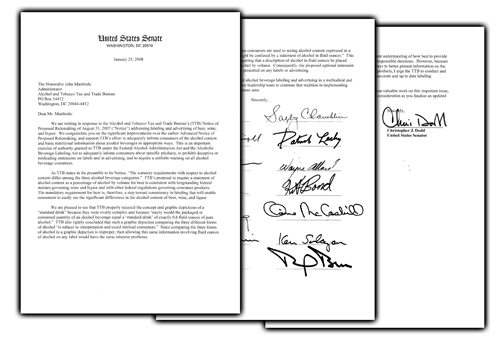
13 Senators submitted a 2 page comment back in January of 2008. It said:

  1. The proposed rule looks “methodical and careful,” for the most part.
  2. It is time for TTB to require an alcohol content statement on beer, to be consistent with wine and spirits.
  3. It is improper to show standard drinks by ounces or graphical depictions, whether optional or mandatory. They are complex and misleading.

Senator Dodd wrote separately, to say:

  1. “I agree strongly with your proposal to require the listing of nutritional information on alcoholic beverages.”
  2. Alcoholic beverages are the only food or beverage item for which standardized information is not readily available.
  3. Standardized nutrition information, on labels, is “critically important.”
  4. The rule should require labels to show the amount of alcohol per serving, in fluid ounces.
  5. Labels should define “moderate drinking” and explain that a standard drink contains 0.6 fluid ounces of alcohol.
  6. A standard drink would be 12 ounces of beer, 5 ounces of wine and 1.5 ounces of spirits.

Related Posts:

Tags:

,

Posted in:

alcohol beverages generally


Email This Post Email This Post     |    Print This Post Print This Post     |    


Miller and Bud Race Yet Again

bs55

First there was Miller Lite, at about 96 calories per 12 ounces (back around 1975).

In later years the non-alcoholic malt beverages (or “near beers”) became more common, with leading brands such as Clausthaler and Kaliber at about 80 calories (as per Skilnik).

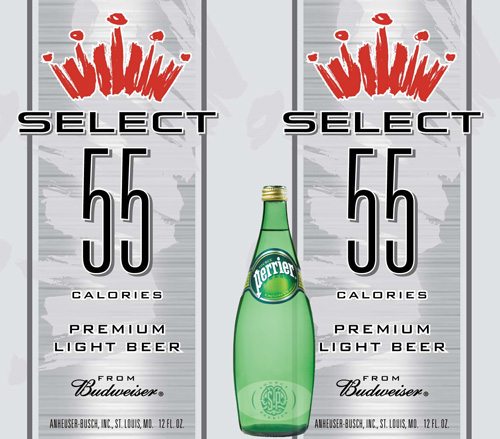
Now, in the past year, it appears we have a race to the bottom. That is, Miller Genuine Draft 64 came out about a year ago. It is, not surprisingly, 64 calories per 12 ounces (and 2.8% alc./vol.).

Lower and more recent still is Bud Select 55. It is only 55 calories and 2.4% alc./vol.

This is one important trend over the past 34 years. In a future post we will look at a countervailing trend toward very high calorie/alcohol malt beverages.

All of this leads us to wonder, where will this go in the next 34 years? When the Jonas Brothers hit middle age, will they be drinking Bud Exträ Epic Mega Select 11 (down near the lower limits for the legal definition of beer)? Hops flavored Perrier?

Related Posts:

Tags:

, , ,

Posted in:

malt beverage


Email This Post Email This Post     |    Print This Post Print This Post     |    


Michael Taylor’s Comment for Diageo; Top 5 Things to Know

diageo

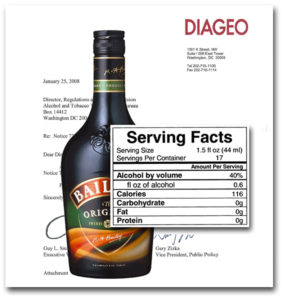
It is likely that all beer, wine and spirits labels will change dramatically in the near future. TTB Administrator John Manfreda confirmed this in a recent speech. TTB has been working on new rules since CSPI and other groups submitted a petition in 2003. The new rules would require a “Serving Facts” panel on every container. This panel would include a lot more information, such as the typical serving size, number of servings per container, calories, carbohydrates, protein and fat. Because this is a big, controversial change, TTB has received more than 18,000 public comments during the past few years. There are far too many comments for most people to review, and so we will highlight and summarize the most noteworthy comments here. The most recent proposal and comments are here. This is comment 21 in a series; to see others, click on the “serving facts” tag below.

Michael Taylor (on behalf of Diageo) submitted a 4 page comment. It said:

  1. Diageo hired Mr. Taylor in 2005 and he’s currently a research professor at George Washington University. From 1991-1994 he was FDA’s Deputy Commissioner for Policy and was actively involved in setting the comparable rules for foods more generally.
  2. I am disappointed that TTB will not require reference to a “standard drink.”
  3. The Dietary Guidelines are an important tool and among other things they point out that moderate consumption of alcohol may convey health benefits.
  4. It is wrong to argue that there is no “standard drink.” The concept can and should be used to avoid the need for consumers to make complex calculations at the point of purchase. It is similar to the % daily value concept successfully deployed by FDA.
  5. “Any new alcohol label will have to be explained to consumers, and TTB should recognize that no new information tool on a consumer label achieves its full utility overnight or automatically.” TTB must preserve the “serving facts” concept and make it workable.

Related Posts:

Tags:

,

Posted in:

alcohol beverages generally


Email This Post Email This Post     |    Print This Post Print This Post     |    


CSPI Comment; Top 6 Things to Know

cspi

It is likely that all beer, wine and spirits labels will change dramatically in the near future. TTB has been working on new rules since CSPI and other groups submitted a petition in 2003. The new rules would require a “Serving Facts” panel on every container. This panel would include a lot more information, such as the typical serving size, number of servings per container, calories, carbohydrates, protein and fat. Because this is a big, controversial change, TTB has received more than 18,000 public comments during the past few years. There are far too many comments for most people to review, and so we will highlight and summarize the most noteworthy comments here. The most recent proposal and comments are here. This is comment 20 in a series; to see others, click on the “serving facts” tag below.

CSPI submitted a 10 page comment. It said:

  1. CSPI has been pushing TTB and ATF on this since 1972.
  2. Alcohol beverage labels offer few uniform disclosures to help consumers. Consumers deserve basic, uniform information that can help them “measure, monitor, and moderate their drinking.”
  3. Alcohol is “America’s most popular, legal drug.”
  4. TTB ignores more than 35 years of requests for ingredient labeling, and instead requires disclosure of rarely occurring nutrients such as fats and proteins. TTB should also require ingredient labeling.
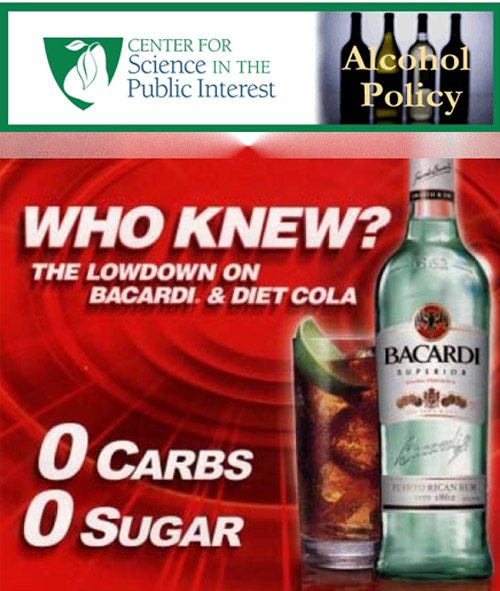
  5. CSPI is concerned that marketers will exploit the nutritional information to “hawk alcoholic beverages as diet or health drinks.”
  6. CSPI strongly opposes the linear format except on 50 ml. containers.

Thirty five years into its marathon, and nearing the finish line, this article says CSPI is in dire financial circumstances.

Related Posts:

Tags:

,

Posted in:

alcohol beverages generally


Email This Post Email This Post     |    Print This Post Print This Post     |    


Feedburner Get bevlog via email. Enter email address:

Delivered by FeedBurner

RSS Subscribe to the RSS feed


This blog has been enhanced by WeFixWP